
Quality confectionary versus food engineering
Posted by Ruth Medd on 23rd Feb 2026
Why Charley's Easter Eggs Make Mass-Produced Eggs Look Like Yesterday's News
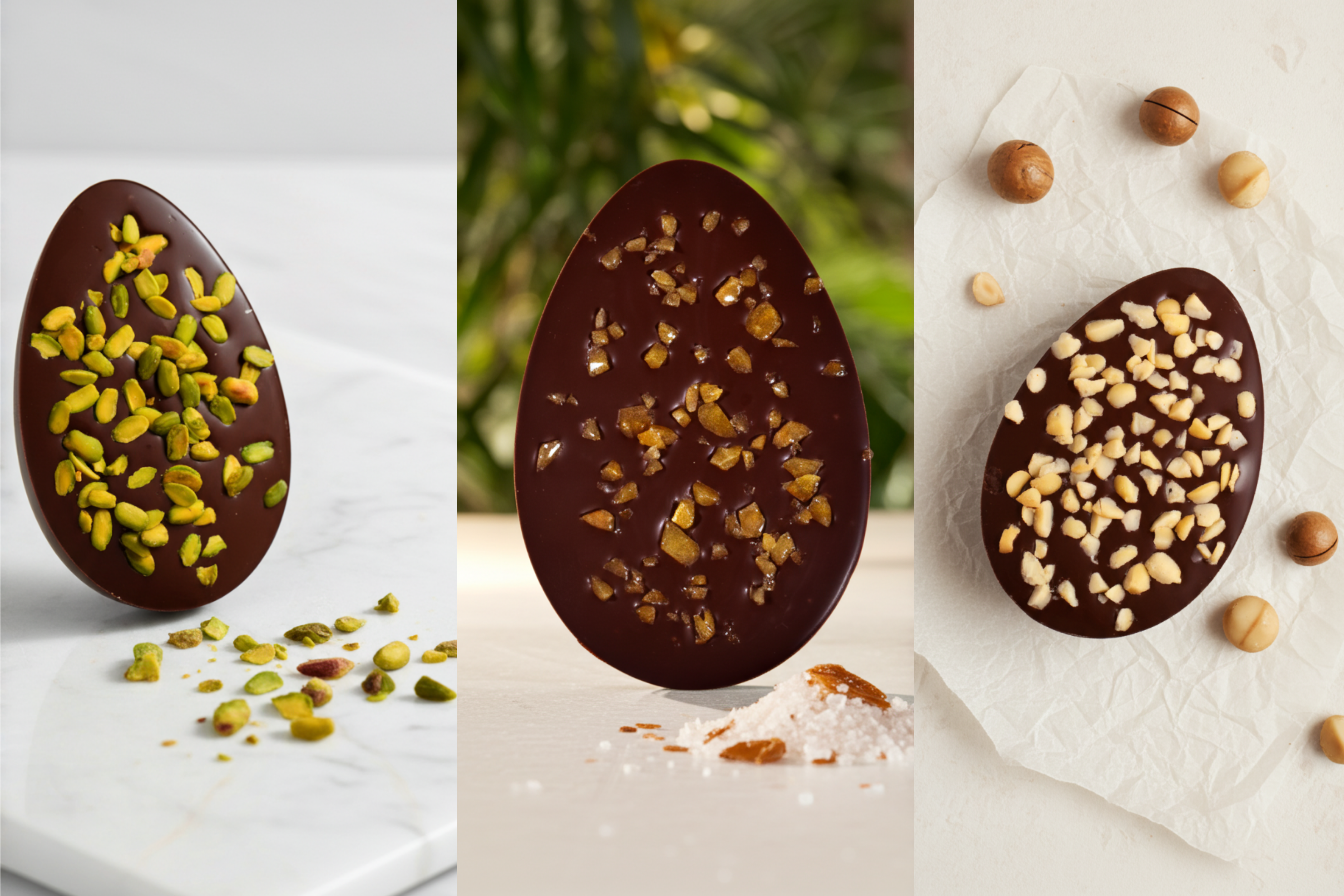
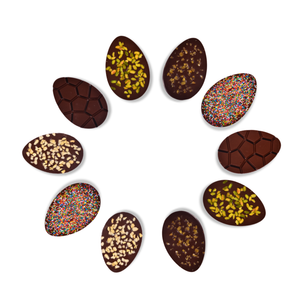
It’s that time of the year. The shops are full of Easter eggs. Charley’s at Mission Beach, are again doing something different. Our bunnies are back. But this year we also have 2D eggs. An eggscellent offering.
The engineering
Mass-produced Easter eggs are a triumph of food engineering rather than pure confectionery. To survive the rigors of global shipping, fluctuating warehouse temperatures, and being stacked layers high on supermarket shelves, manufacturers use a sophisticated "cocktail" of additives to get an egg with gloss, snap, and durability.
The quality
Unlike supermarket eggs Charley’s eggscellent offering is better for the planet. Our chocolates do not have any engineering additives . Charley’s is about high quality chocolate that can compete with the world's best and win.
From Tree to Bunny and Egg (No Shortcuts)

Here's where most chocolate companies lose you: their cocoa travels halfway around the planet before it sees a chocolate mould. By the time it reaches your Easter basket, it's lost whatever magic it might have had; a tired traveller!
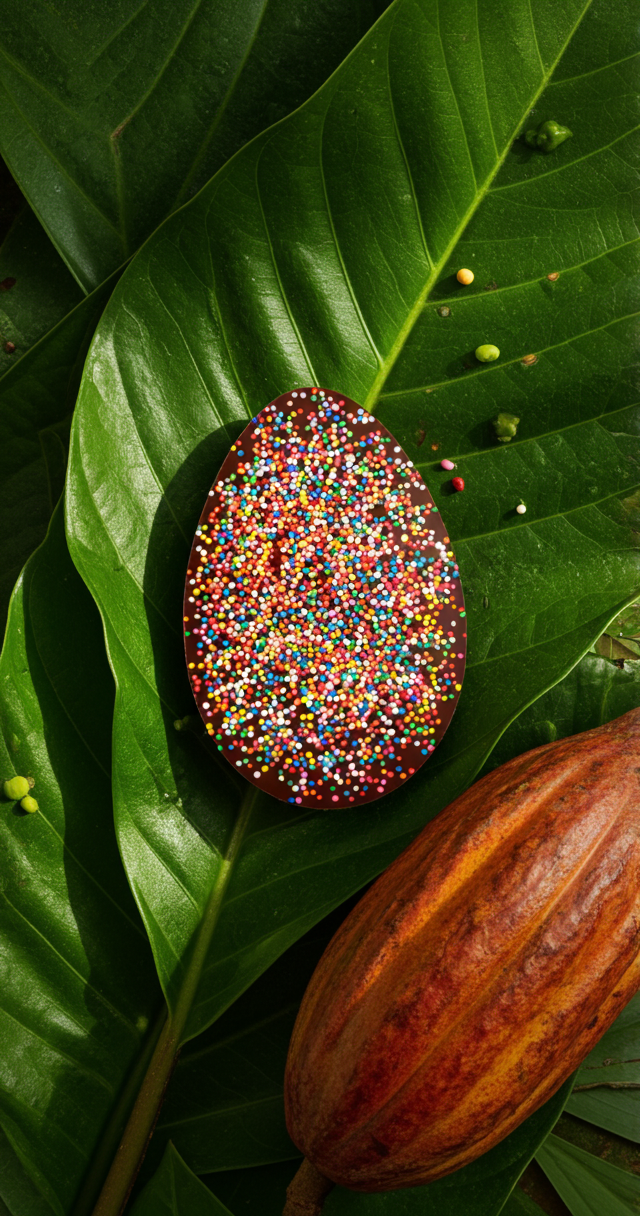
Charley's Bean-to-bar cocoa is grown by our close neighbours in Papua New Guinea and our Tree-to-bar cocoa is grown right here at their Mt Edna plantation in Far North Queensland. We ferment it, roast it, and craft it into chocolate, all in the same place. We are one of the only producers in Australia doing it. The result is Chocolate with bright tropical notes that actually taste like something, not the bland, waxy stuff on offer.
The Melt Test (Warning: You'll Notice the Difference)
Those eggs at the cost cutting end of the market are like chewing candle wax. That's because manufacturers cut costs by replacing expensive cocoa butter with palm oil and additives like PGPR (Polyglycerol Polyricinoleate) which is an emulsifier. These fillers help the chocolate coat moulds faster (great for profits, terrible for your taste buds). They also melt at a higher temperature than your tongue, which is why you get that greasy film in your mouth.
Charley's uses high quality cocoa butter and relies on precision tempering: heating and cooling the chocolate to create the perfect crystal structure. You get that satisfying snap when you break it, and a clean melt the second it hits your tongue. No waxy aftertaste. No greasy film. Just proper chocolate.
Built to Last (Not Shatter Before You Get Home)
Mass-produced Easter eggs are spun so thin they barely survive the car trip from the shops. And with 2026's shrinkflation trend, they're getting even thinner: same packaging, less chocolate, more air.
Charley's signature eggs are hand-cast, which means they've got real weight and substance. You're not paying for a puff of air wrapped in a sugar shell. You're getting solid, Australian-grown heritage chocolate.

Good for Your Conscience, Too
In 2026, where your chocolate comes from matters as much as how it tastes. Some manufactures are linked to deforestation and dodgy supply chains. Think of palm oil plantations wiping out rainforests. This is cocoa sourced from regions with questionable labour practices.
Charley's operates in a World Heritage-listed region and follows strict sustainability practices. The plantation uses a modified Tatura trellis system (designed to protect against cyclones), and they're palm oil-free. When you choose Charley's, you're backing Australian agriculture and voting against the race to the bottom that's dominating the 2026 Easter market.
The Bottom Line
This Easter, you've got a choice: hollow disappointment wrapped in shiny foil, or Australian chocolate that delivers. Charley's might cost a bit more than the supermarket offerings. But here's what you're really paying for: chocolate made the right way, by people who do give a damn, in one of the most beautiful places in Australia.
Your taste buds will thank you. So will the planet. See our Easter collection here